There is a particular kind of freedom in walking straight past the baggage carousel. No waiting, no lost luggage, no dragging a heavy case up a hotel staircase. Travelling with only a carry-on can sound impossible if you are used to packing for every scenario, but with the right list and a few smart techniques, a week or more fits comfortably into one small bag.
This guide gives you a complete carry-on packing list, explains the liquid rules that catch so many travellers out, and shares the packing methods that make the biggest difference to space.
Start with the right bag
Before you pack anything, check your airline’s carry-on allowance. Size and weight limits vary between airlines, and budget carriers are often stricter. Many major US airlines accept carry-on bags of around 22 x 14 x 9 inches including wheels and handles, but always check the exact dimensions on your airline’s website for every flight on your trip, including connecting flights on different carriers.
When choosing a bag, look for:
- A lightweight shell or frame, so the bag itself does not eat up your weight allowance
- A clamshell opening for easy packing, or a backpack style if you will be walking on cobbled streets or taking trains
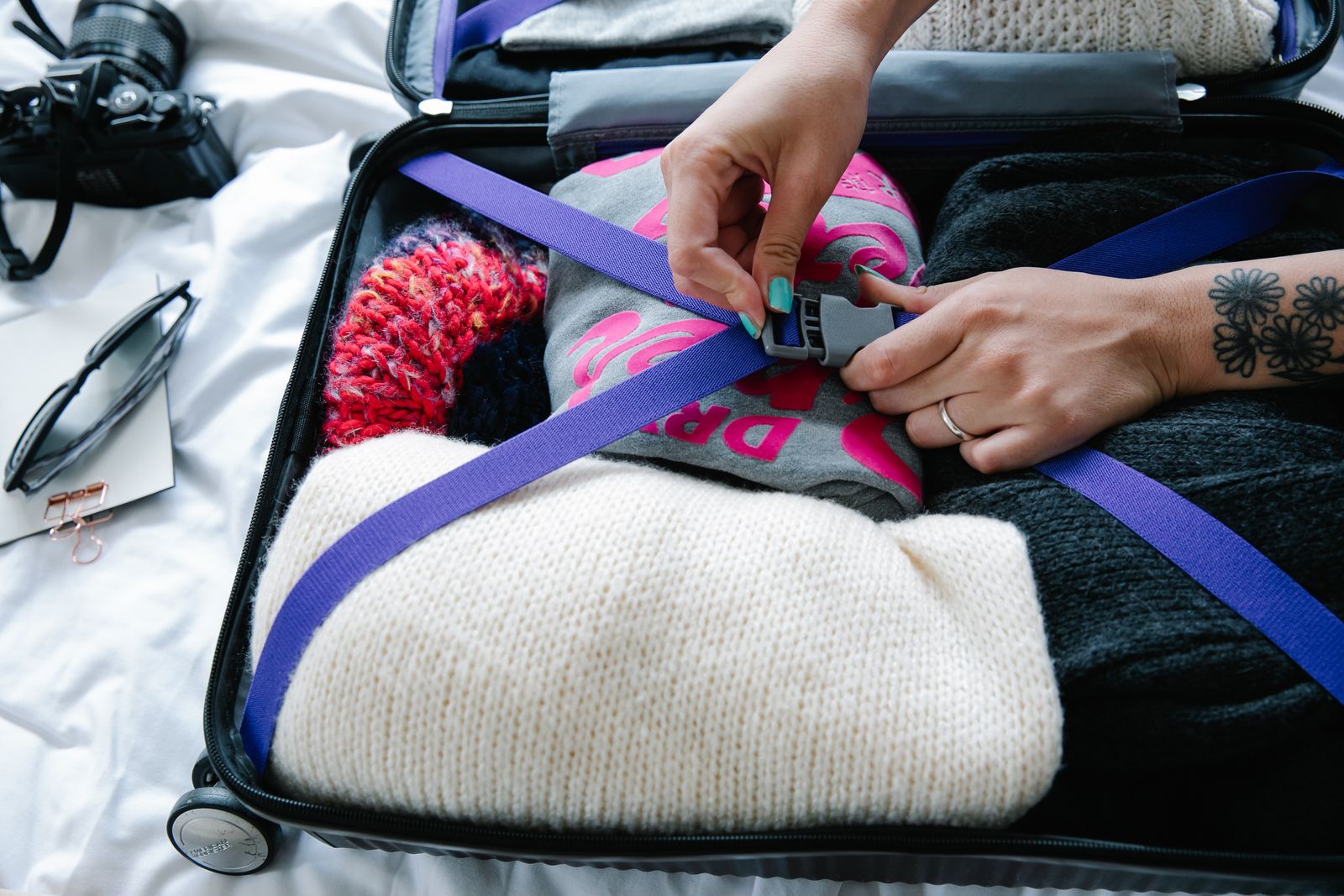
- Compression straps inside to hold clothes flat
- A separate personal item, such as a tote or small backpack, for anything you need during the flight
The carry-on packing list
Use this as a starting point for a five to seven day trip in mild weather, then adjust for your destination and plans.
Clothing
- 4 to 5 tops that all work with your bottoms
- 2 pairs of trousers, jeans or skirts
- 1 dress or jumpsuit that can go from day to evening
- 1 light layer, such as a cardigan or denim jacket
- 1 warmer layer or packable jacket, depending on the weather
- 5 to 7 sets of underwear and socks
- Sleepwear
- Swimwear, if needed
- 2 pairs of shoes maximum: wear the bulkiest pair on the plane
Toiletries and beauty
- Travel-size cleanser, moisturiser and sunscreen
- Toothbrush, toothpaste and floss
- Deodorant (solid sticks avoid the liquid limit)
- Travel-size shampoo and conditioner, or solid bars
- Minimal makeup in multi-use products, such as a tinted balm for lips and cheeks
- Hairbrush, hair ties and any small styling tools
- Prescription medication in its original packaging, plus a basic first-aid kit
Tech and documents
- Passport or ID, visas and printed or offline copies of bookings
- Phone and charger
- Power bank (this must travel in your cabin bag, not checked luggage)
- Universal travel adapter
- Headphones
- Travel insurance details and emergency contacts
Personal item for the flight
- A refillable water bottle (empty it before security)
- Snacks
- A light scarf or wrap, which doubles as a blanket
- Lip balm and hand cream within your liquid allowance
- Eye mask and earplugs for long flights
- A pen for arrival forms
Understanding the liquids rule
In the United States, carry-on liquids are covered by TSA’s 3-1-1 rule. According to the Transportation Security Administration, you can bring a quart-sized bag of liquids, aerosols, gels, creams and pastes in your carry-on, with each item in a travel-sized container of 3.4 ounces (100 millilitres) or less. Anything in a larger container belongs in checked luggage.
A few points that catch people out:
- The container size counts, not how much is left inside. A large bottle with a small amount of shampoo left will still be taken.
- Creamy and spreadable foods count as liquids too, including yogurt, peanut butter, hummus and jam.
- Medications and baby food or formula are exempt from the limit, but you should declare them at the checkpoint for screening.
- Rules differ outside the US. Some airports abroad with newer scanners have relaxed their limits, while others have not. Check the rules for every airport you will pass through, including your return journey.
To make your liquids bag go further, switch to solid alternatives wherever you can: shampoo and conditioner bars, solid perfume, toothpaste tablets, stick sunscreen and cleansing balms.
Packing techniques that save space
Roll, fold or bundle
Rolling works well for casual clothes like T-shirts, leggings and knitwear, and it reduces creases in soft fabrics. Structured pieces such as blazers and shirts fare better folded flat. For wrinkle-prone items, try bundle packing: wrap clothes around a central core, such as a pouch of underwear, so there are no sharp folds.
Use packing cubes
Packing cubes keep everything organised and gently compress clothes. Assign one cube to tops, one to bottoms and one to underwear, so you can find anything without unpacking the whole bag. Compression cubes squeeze out even more air.
Fill every gap
Tuck socks and chargers inside shoes. Use the corners of your bag for small items. Put shoes in a bag or shower cap so they do not mark your clothes.
Wear your heaviest items
Wear your bulkiest shoes, your jacket and your thickest jumper on the plane. You can always take a layer off once you are on board.
How to pack a capsule for your trip
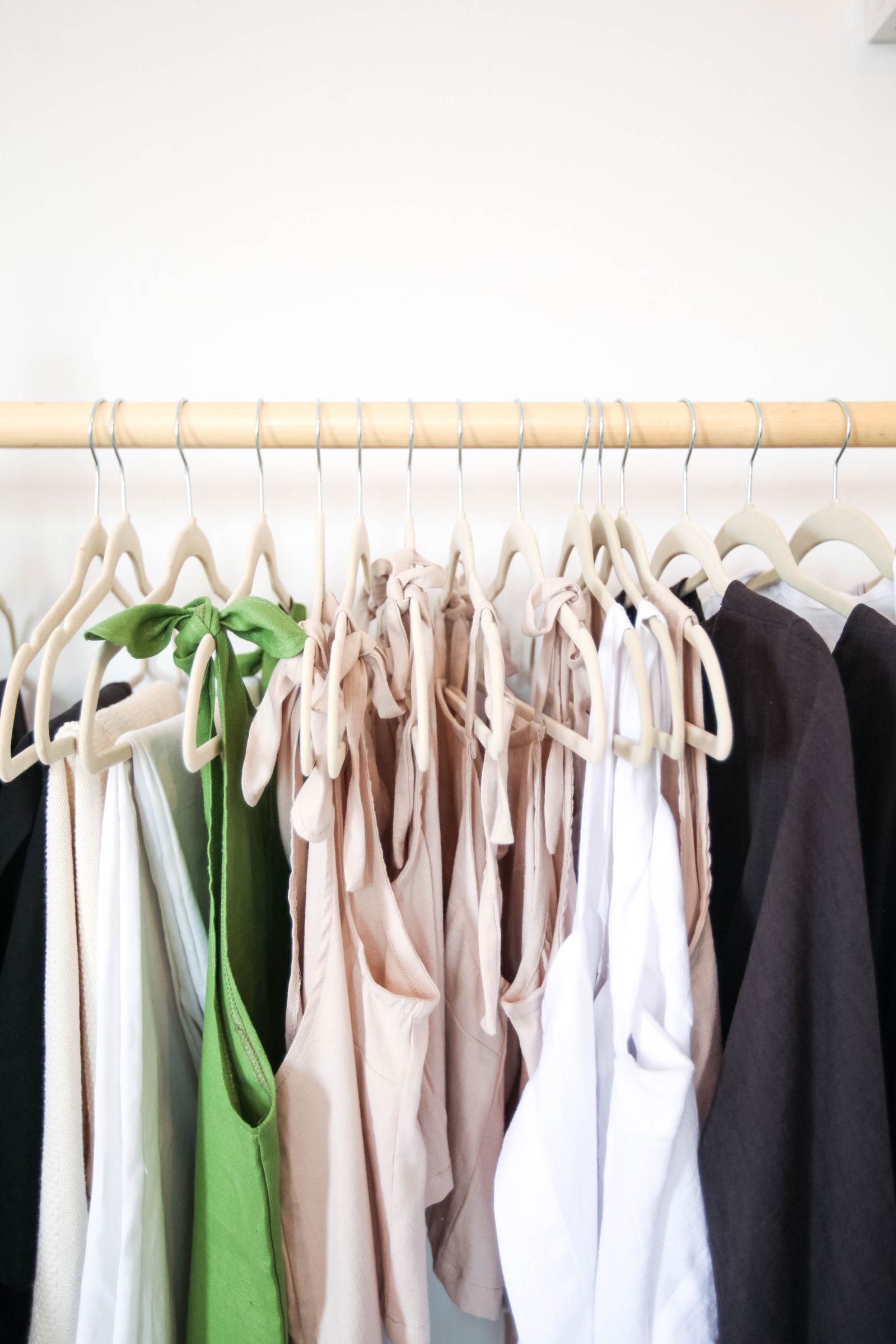
The most reliable way to pack light is to build a mini capsule wardrobe around two or three colours. When every top matches every bottom, five tops and two trousers give you ten outfits. Accessories such as a scarf, a statement earring or a belt then change the look without taking up space.
Our step-by-step guide on how to build a capsule wardrobe uses exactly the same principle for everyday dressing.
What not to pack
- Just-in-case outfits. If you cannot picture exactly when you will wear it, leave it at home.
- Full-size toiletries. Most hotels provide basics, and you can buy anything you forget at your destination.
- More than two pairs of shoes. Shoes take up more space than almost anything else.
- Heavy books. Download them to your phone or an e-reader instead.
- Valuables you do not need. Leave expensive jewellery at home.
Doing laundry on the road
Packing light for longer trips relies on washing a few items as you go. A small travel-size laundry soap and a flat sink stopper make it easy to wash underwear and T-shirts in a hotel sink. Roll washed clothes in a towel and press down to squeeze out water, then hang them overnight. Many hotels and apartments also offer laundry services or machines.
A quick packing checklist before you leave
- Check the weather forecast for your destination
- Confirm your airline’s carry-on size and weight limits
- Lay out every outfit you plan to wear, then remove a third
- Pack your liquids bag and keep it easy to reach for security
- Charge your devices and pack the power bank in your cabin bag
- Download boarding passes, maps and entertainment for offline use
- Weigh your bag at home if your airline has a weight limit
Frequently asked questions
Can I really pack for a week in a carry-on?
Yes. With a colour-coordinated mini wardrobe, two pairs of shoes and solid toiletries, a week fits easily. For longer trips, plan to do a small load of laundry halfway through.
Do power banks go in carry-on or checked luggage?
Power banks and spare lithium batteries should travel in your carry-on, not checked luggage. Some airlines also have rules about using them on board, so check before you fly.
Is it better to roll or fold clothes?
Both work. Rolling suits soft, casual pieces and helps reduce creases, while folding is better for structured clothing like blazers and shirts. Packing cubes make either method neater.
The bottom line
Travelling with just a carry-on comes down to three habits: pack a small, matching wardrobe, keep liquids to a minimum and use every bit of space wisely. Once you have tried it, the freedom of skipping baggage claim is hard to give up.
Planning your next getaway? Find more ideas in our travel section.