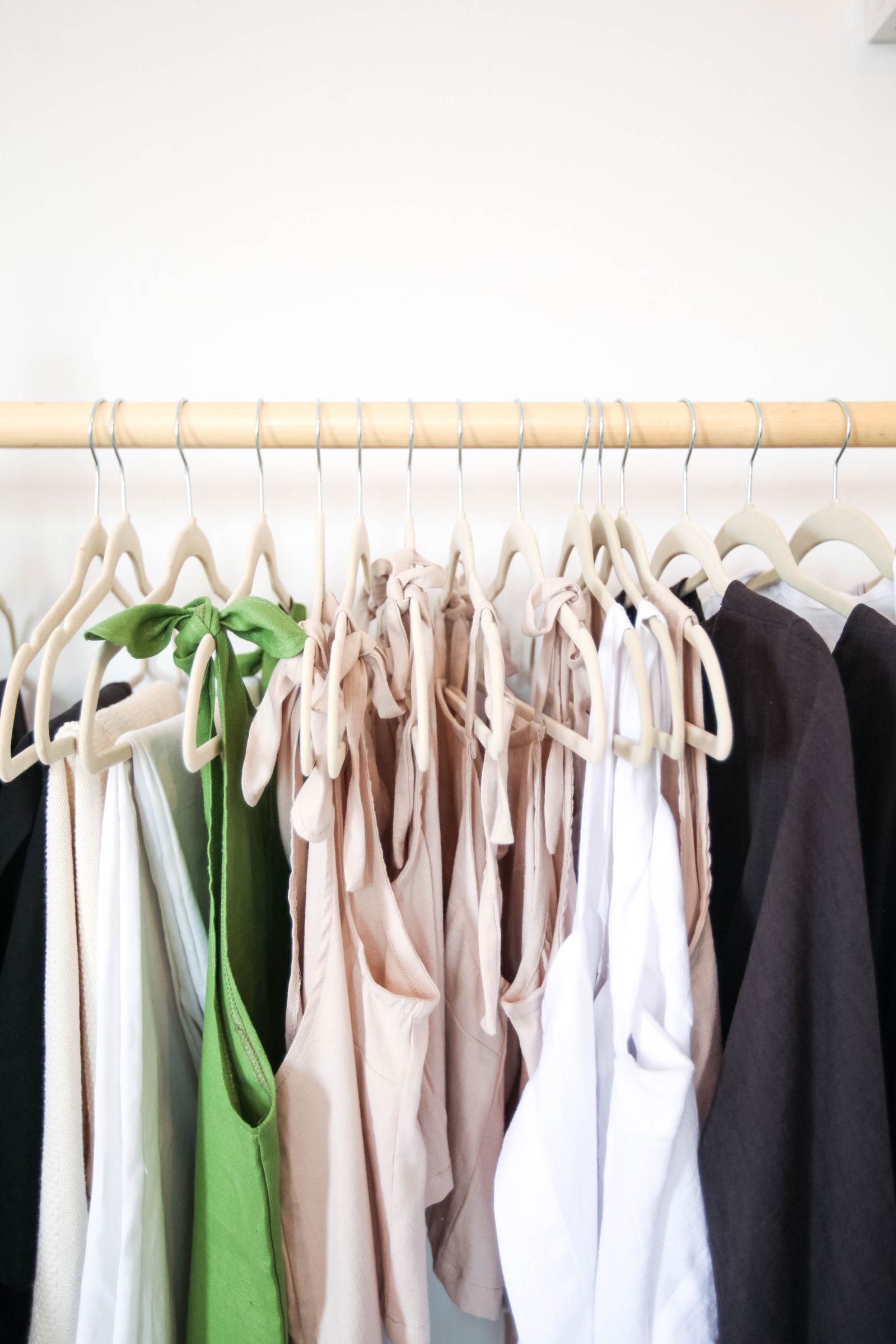
Most of us wear a small slice of what we own. The rest hangs there: the dress bought for one wedding, the trousers that never quite fit, the top that only works with shoes you no longer have. A capsule wardrobe fixes that problem by flipping the approach. Instead of buying pieces one at a time and hoping they work together, you build a small, deliberate collection where almost everything matches almost everything else.
It is not about owning as little as possible or dressing in beige forever. A good capsule is simply a wardrobe that has been edited with intention, so getting dressed takes two minutes instead of twenty. This guide walks through exactly how to build one, how many pieces you really need, and the mistakes that make people give up after a month.
What a capsule wardrobe actually is
The term goes back to the 1970s, when London boutique owner Susie Faux used it to describe a core set of essential, long-lasting garments that could be topped up each season. The idea was later popularised by designer Donna Karan’s “Seven Easy Pieces” collection in 1985. The principle has not changed since: a limited number of pieces, chosen so they combine easily, worn often, and replaced only when they wear out.
In practice, a capsule wardrobe usually has three layers:
- Core pieces you wear year-round, such as jeans, a white shirt, a knit, a blazer and comfortable shoes
- Seasonal pieces you rotate in and out, like linen trousers in summer or a wool coat in winter
- Accent pieces that add personality, such as a printed scarf, a coloured bag or statement earrings
How many pieces should a capsule wardrobe have?
There is no magic number, and anyone who insists on exactly 33 items is selling a rule, not a solution. Most people land somewhere between 25 and 45 pieces per season, not counting underwear, sleepwear, gym clothes or occasion wear. A useful starting point looks like this:
- 8 to 10 tops
- 4 to 6 bottoms (trousers, jeans, skirts)
- 2 to 4 dresses or jumpsuits
- 3 to 5 layers (cardigans, blazers, knitwear)
- 2 outer layers (a light jacket and a warmer coat)
- 4 to 6 pairs of shoes
If your life involves an office four days a week, your mix will lean towards tailoring. If you work from home or run after small children, it should lean towards comfortable, washable pieces. The right number is the one that covers how you actually live.
Step 1: Audit what you already own
Before buying anything, take everything out of your wardrobe and sort it into four piles:
- Love and wear often. These are the foundation of your capsule.
- Like but rarely wear. Ask why. Wrong fit? Nothing to pair it with? Uncomfortable fabric?
- Do not fit or need repair. Be honest about whether you will actually alter or mend them.
- Do not love. Donate, sell or recycle.
The first pile tells you more about your style than any trend report. Look for patterns. Do you always reach for high-waisted trousers? Soft knits rather than crisp shirts? Midi lengths? Those patterns become your shopping rules.
A simple trick if you find it hard to decide: turn all your hangers backwards. Each time you wear something, hang it back the normal way. After six to eight weeks you will have hard evidence of what you really wear.
Step 2: Choose a colour palette that works together
A capsule only works if pieces combine easily, and colour does most of that work. Pick:
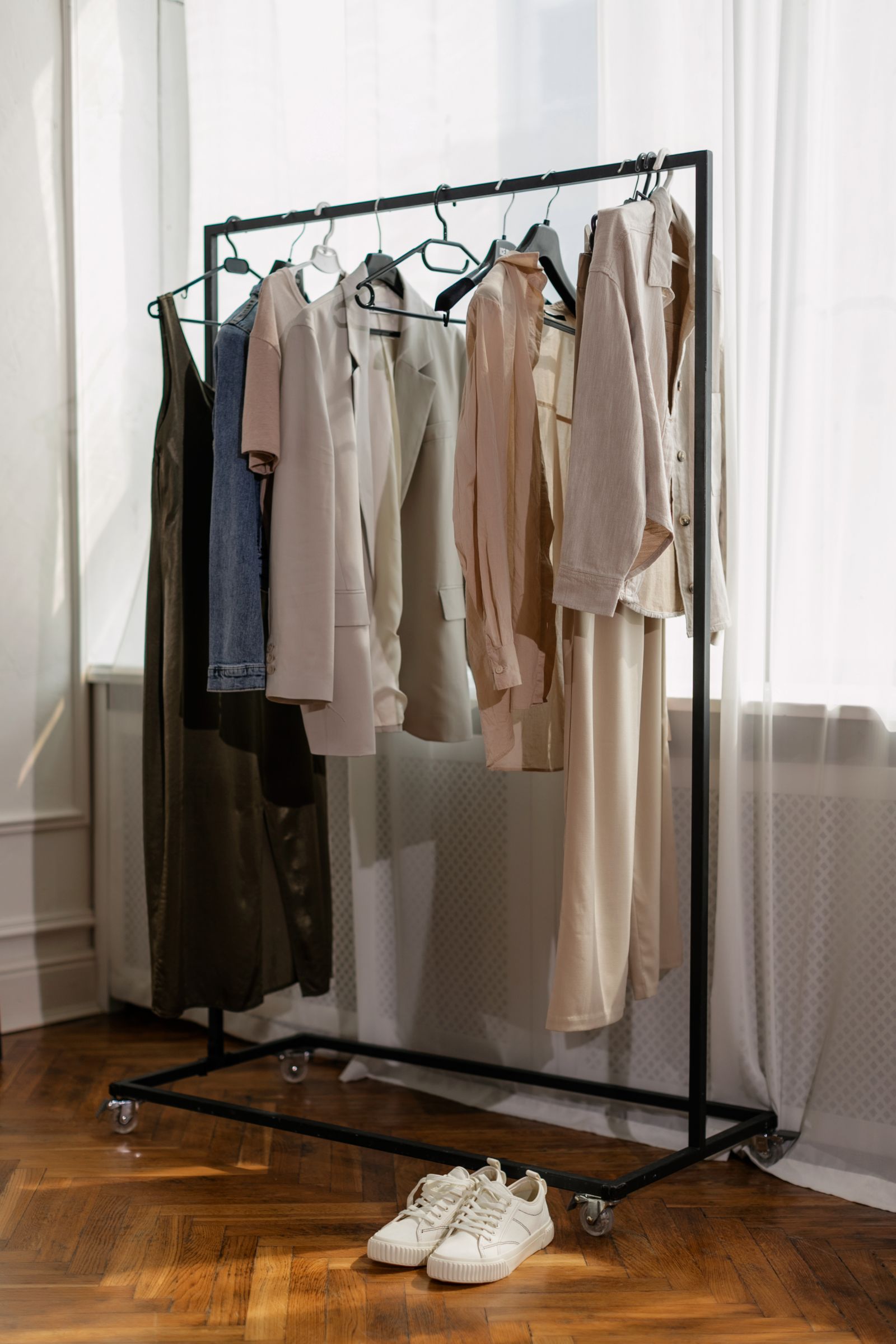
- Two or three base neutrals for your bigger pieces, for example navy, camel and cream, or black, grey and white
- Two or three accent colours that suit your skin tone and mood, such as dusty pink, olive or rust
Your trousers, coats and shoes mostly come from the neutrals. Tops, knits and accessories can bring in the accents. Because every accent works with every neutral, you get dozens of combinations from a small number of clothes.
Neutral does not have to mean boring. Warm tones like cream, tan, chocolate and terracotta feel softer and more feminine than stark black and white, and they photograph beautifully if you love sharing outfits online.
Step 3: Build around your core essentials
Start with the pieces that hold everything else together. For most women, a versatile core includes:
Tops
- A white or cream shirt that can be tucked, knotted or worn open over a vest
- Two or three good-quality T-shirts in your neutrals
- A fine-knit long-sleeve top or bodysuit
- One or two blouses in an accent colour or subtle print
Bottoms
- Well-fitting straight or wide-leg jeans in a mid or dark wash
- Tailored trousers in a neutral
- A midi skirt that works with trainers as well as heels
Layers and outerwear
- A blazer that fits your shoulders properly
- A soft cardigan or cosy jumper
- A trench coat or light jacket, plus a warm winter coat if your climate needs one
Dresses
- One easy day dress you can wear with flat sandals or trainers
- One dress that can go out in the evening with a change of shoes and jewellery
Shoes
- White leather trainers
- Comfortable flats or loafers
- Ankle boots or a dressier heel, depending on your lifestyle
- Sandals for warmer months
Step 4: Fill the gaps slowly
Once your core is in place, make a written list of what is missing and shop only from that list. Buying slowly is what separates a capsule wardrobe from a shopping spree with a nicer name.
Before buying anything new, ask three questions:
- Can I make at least three outfits with pieces I already own?
- Does it fit me well today, not after I lose weight or have it altered?
- Is the fabric something I will be happy wearing and washing regularly?
If the answer to any of these is no, leave it. A useful rule is cost per wear: a 100 dollar coat worn 100 times costs one dollar per wear, while a 30 dollar top worn twice costs 15.
Step 5: Pay attention to fabric and fit
When you own fewer clothes, each piece gets worn more often, so quality matters. You do not need designer labels, but you do need to check a few things in the shop:
- Fabric. Natural fibres such as cotton, linen, wool and silk, or good blends, usually wear and breathe better than thin synthetics.
- Seams. Tug gently. They should lie flat with no gaps or loose threads.
- Fit across the shoulders. Hems and waists are easy to alter. Shoulders are not.
- Pattern matching. On stripes and checks, well-made garments line the pattern up at the seams.
A tailor can turn an average piece into one that looks made for you. Taking up trousers or nipping in a waist is usually inexpensive and makes a bigger difference than buying something new.

How to create outfits from a small wardrobe
The fun part of a capsule wardrobe is discovering how many outfits it gives you. A few techniques help:
- Change the shoes. The same jeans and knit look completely different with trainers, loafers or heeled boots.
- Play with tucking. A full tuck, a half tuck or a knotted front changes the shape of an outfit.
- Layer differently. A shirt worn open over a T-shirt, a blazer over a dress, a cardigan tied around the shoulders.
- Use accessories. A belt, a scarf or bold earrings are the easiest way to bring in colour and trends without buying new clothes.
Save outfits you love by taking a quick mirror photo. On busy mornings, scrolling through a folder of tried-and-tested looks beats staring at the wardrobe.
Updating your capsule each season
Every three months or so, swap seasonal pieces in and out. Store off-season clothes in a box or under-bed container so they are out of sight but easy to find. When you bring them back, try everything on. It is the perfect moment to spot what needs repairing or replacing, and to notice which pieces you genuinely missed.
If you want to try a trend, add it as an accent rather than a core piece. A trend-colour bag or a statement top is easy to wear with your neutrals and easy to let go of next year.
Common capsule wardrobe mistakes
- Copying someone else’s list. A capsule built for a lawyer in London will not suit a student in Dubai. Start from your own life.
- Going too minimal too fast. Cutting down to 20 pieces overnight usually ends in frustration and a panic shop. Reduce gradually.
- Buying everything new. The most sustainable and affordable capsule starts with what you already own.
- Ignoring comfort. If something pinches, itches or needs constant adjusting, you will not wear it, however good it looks.
- Forgetting your climate. Heavy wool in a hot city or flimsy linen in a cold one wastes money and space.
Frequently asked questions
Is a capsule wardrobe only neutral colours?
No. Neutrals make the base easy to mix, but your accent colours, prints and accessories are where your personality shows. Many people choose soft pastels or rich jewel tones as their accents.
Do I need a separate capsule for work and home?
Not always. Many pieces cross over, such as a good blazer, tailored trousers or a smart knit. If your work has a strict dress code, it can help to keep a small work section within your main capsule.
How long does it take to build a capsule wardrobe?
The first edit can happen in a weekend. Building a capsule you truly love usually takes a few months, because the best gaps reveal themselves only once you start wearing the clothes you kept.
The bottom line
A capsule wardrobe is less about rules and more about knowing yourself. Start with what you already wear and love, choose a palette that makes everything work together, fill gaps slowly and invest in fit. The reward is a wardrobe that feels calmer, an easier morning and a style that looks unmistakably like you.
Looking for more style ideas? Browse our latest fashion and outfit ideas, or pair your new capsule with one of our easy hairstyles for busy mornings.