Small living rooms have a way of filling up fast. A sofa, a coffee table, a TV and suddenly there is no room left to walk, let alone have friends over. It is tempting to blame the square footage, but in most cases the size of the room is not the real problem. The way it is furnished, lit and arranged makes a much bigger difference than a few extra feet ever would.
Interior designers use the same handful of tricks again and again to make compact rooms feel open and calm. None of them require knocking down walls, and most can be done in a weekend.
Choose furniture that shows some floor
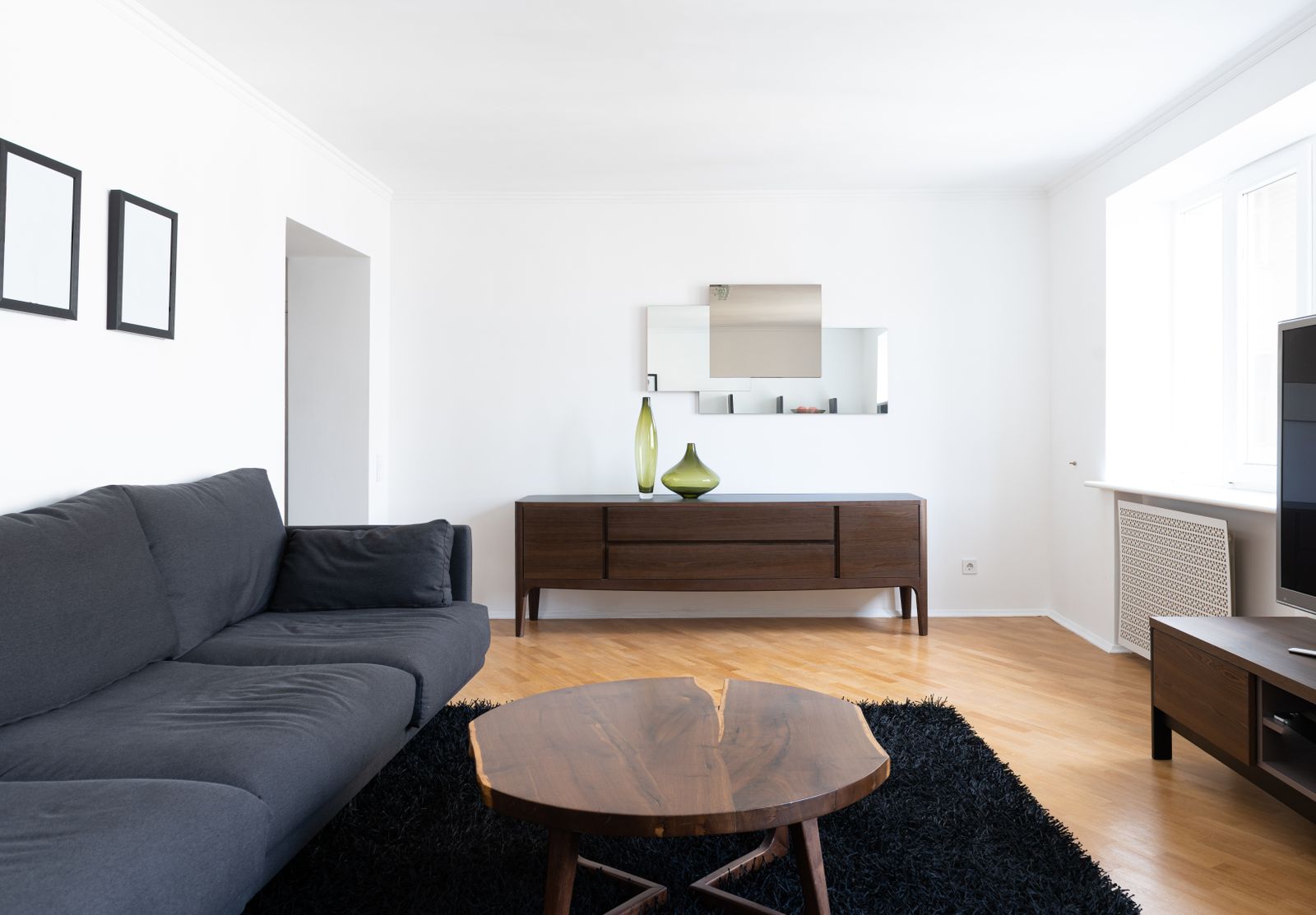
The more floor you can see, the bigger a room feels. Sofas, chairs and media units raised on slim legs let light pass underneath and make the floor appear to continue beneath them. Heavy pieces that sit flat on the ground do the opposite, visually chopping the room into blocks.
The same logic applies to tables. A glass or acrylic coffee table almost disappears, while a round wooden one with a single pedestal base takes up far less visual space than a chunky square one. Round shapes also make it easier to move around without bumping your shins.
Go bigger on the rug, not smaller
A small rug floating in the middle of the room is one of the most common mistakes in compact spaces. It makes the seating area look cramped and the room look choppy.
Choose a rug large enough that at least the front legs of your sofa and chairs sit on it. This pulls the furniture together into one zone and makes the whole room feel more generous. If budget is tight, a plain, affordable rug in a larger size will do more for the room than an expensive one that is too small.
Hang curtains high and wide
Where you hang your curtains changes how tall your windows and walls look. Mount the rod well above the window frame, closer to the ceiling than to the top of the window, and extend it 20 to 30 centimeters (about 8 to 12 inches) past each side.
When the curtains are open, they will sit against the wall rather than covering the glass, letting in as much daylight as possible. Floor-length curtains in a light, airy fabric add height without adding weight. Short curtains that stop at the windowsill make a room feel lower.
Use mirrors where they can catch light
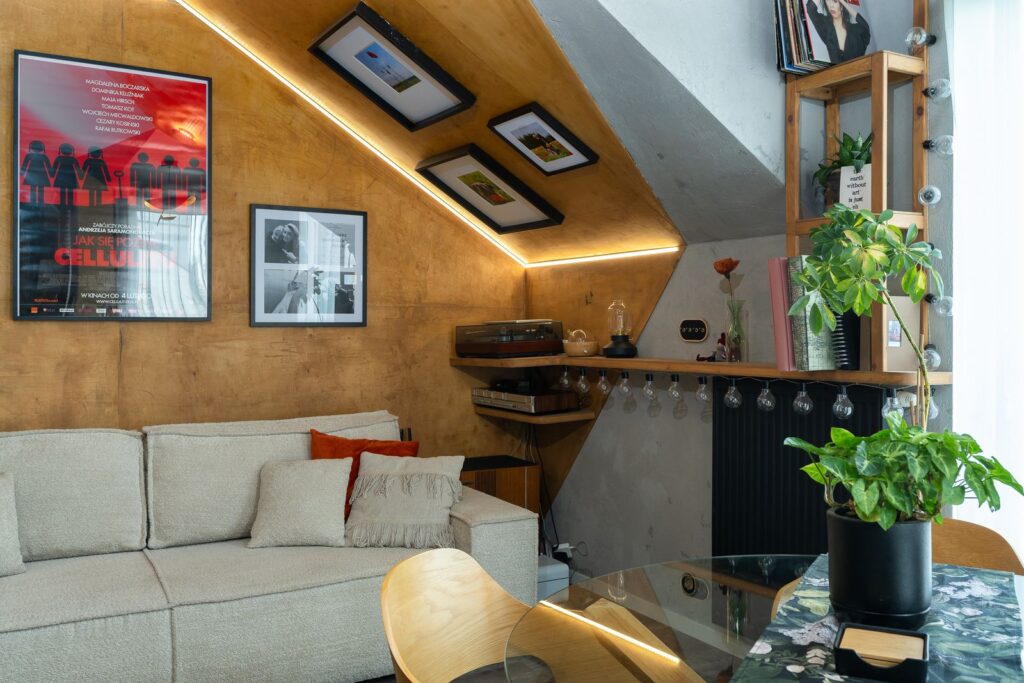
A large mirror is one of the easiest ways to make a room feel deeper. Placement matters. A mirror opposite or beside a window bounces daylight around the room and reflects the view, which adds a sense of space. A mirror facing a cluttered corner simply doubles the clutter.
A floor mirror leaned against the wall feels relaxed and modern, while a cluster of smaller mirrors can work as wall art if you want something more decorative.
Keep the color palette tight
Busy color schemes break a room into pieces. Sticking to a small palette, usually two or three main colors, keeps things calm and connected. Soft whites, warm creams, pale greige and gentle blush tones are reliable choices for brightening a compact space.
If you love darker colors, you do not have to avoid them. Painting walls, trim and even the ceiling in the same deep shade, sometimes called color drenching, blurs the edges of the room and can make it feel cozy and surprisingly spacious. What tends to shrink a room is high contrast, like dark walls with bright white trim drawing attention to every corner.
Layer your lighting
One overhead light makes any room look flat and smaller than it is. Shadows collect in the corners and the edges of the room seem to close in.
Aim for at least three light sources at different heights: an overhead or pendant light, a floor lamp in a corner, and a table lamp or wall sconce near where you sit. Lighting the corners pushes the walls back visually. Wall-mounted lights and plug-in sconces are especially useful in small rooms because they free up surface space.
Fewer, better pieces
It sounds counterintuitive, but filling a small room with lots of small furniture usually makes it feel more crowded. A well-proportioned sofa with a couple of carefully chosen pieces around it looks more intentional than a loveseat, two armchairs, three side tables and an ottoman.
Before buying anything new, measure the room and mark the footprint of the piece on the floor with painter’s tape. Leave walkways of at least 75 to 90 centimeters (around 30 to 36 inches) where people will pass through. If you have to squeeze past it, the piece is too big for the spot.
Let furniture do two jobs
In a compact room, multifunctional pieces earn their place. A few that work especially well:
- Storage ottomans that double as a coffee table, extra seating and a place to hide blankets
- Nesting tables that tuck away when you do not need them and spread out when guests arrive
- A console behind the sofa that holds lamps and books and can work as a slim desk
- A sofa bed if your living room also has to serve as a guest room
Build storage upward
When floor space is limited, use the walls. Tall, narrow bookshelves draw the eye up and make ceilings feel higher. Floating shelves keep the floor clear. Wall-mounting the TV removes the need for a bulky media unit, and the cables can be hidden with a simple cord cover painted the same color as the wall.
Keep open shelves edited. Group books and objects together, leave some empty space on each shelf, and use matching baskets or boxes for anything that does not need to be on display.
Clear the surfaces
Clutter shrinks a room faster than anything else. Remotes, mail, chargers and stray mugs on every surface make even a well-furnished room feel chaotic.
Give everything a home. A small tray on the coffee table for remotes, a lidded basket for throws, and a drawer or box near the door for mail and keys can keep things tidy without much daily effort. A quick five-minute reset in the evening makes the next morning feel noticeably calmer.
If you only change one thing this weekend, make it the lighting. Add a lamp to the darkest corner, switch off the overhead light in the evening, and see how different the room feels. It is the cheapest change on this list, and it is often the one that surprises people most.