
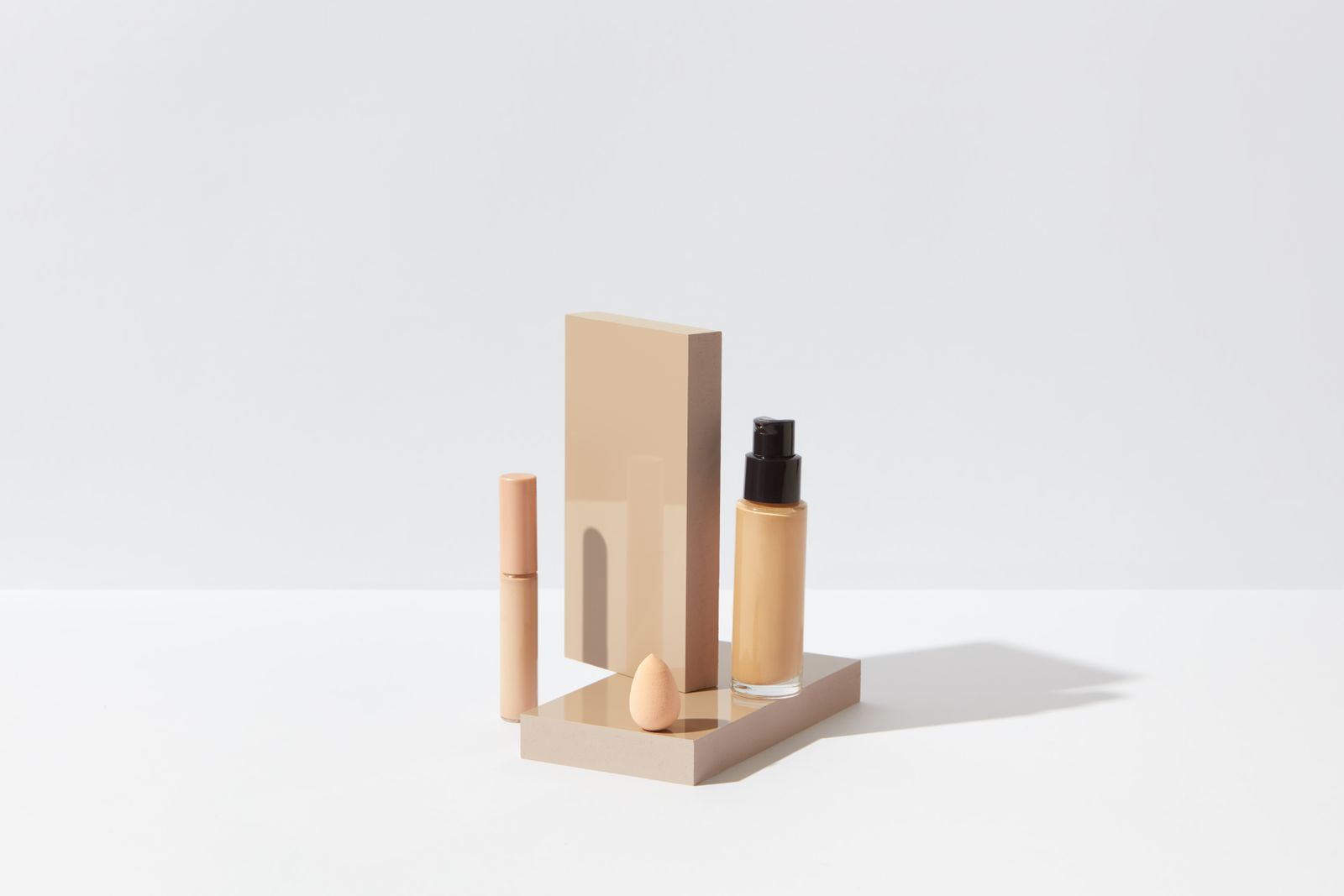
You picked the shade in the store, it looked fine under those bright lights, and then you caught your reflection in the car mirror at lunchtime. Orange jawline. Pale neck. A face that looked like it belonged to someone with a much better tan.
Almost everyone has a bottle like that sitting in a drawer. Foundation is one of the hardest products to buy well, partly because store lighting lies, and partly because most of us were never taught what to actually look for. The good news is that matching your shade is a skill, not luck, and once you know the steps you can get it right on the first or second try.
Start with your undertone, not your shade
Depth is the easy part. Most people can tell whether they are fair, light, medium, tan or deep. Where matches go wrong is undertone, the subtle color that sits underneath the surface of your skin and stays the same whether you are pale in February or sun-kissed in August.
There are three main undertones, plus one that gets overlooked:
- Warm: skin leans golden, yellow or peachy. Gold jewelry tends to look better on you than silver, and you tan fairly easily.
- Cool: skin leans pink, red or slightly blue. Silver flatters you, and you are more likely to burn than tan.
- Neutral: a balance of both. You can wear gold and silver equally well, and nothing in particular jumps out.
- Olive: a greenish or grey cast that often reads as “neutral” but looks ashy in neutral foundations and too orange in warm ones. Many brands now label olive shades separately, which is worth seeking out.
The vein test (blue veins for cool, green for warm) gets shared a lot, but it is unreliable under artificial light. A better check is to hold a pure white T-shirt and an off-white or cream one under your chin in daylight. If pure white makes you look brighter, you probably lean cool. If cream looks more natural and white makes you look washed out, you likely lean warm.
Swatch in the right place
The back of your hand and the inside of your wrist are the two most popular testing spots, and they are also two of the least useful. Your hands see more sun than your face, and your wrist is usually lighter.
Instead, swatch three close shades in vertical stripes along your jawline, starting on the cheek and pulling the stripe down onto your neck. The right shade will seem to disappear into both areas. If a stripe looks like a stripe, it is not your match.
Many makeup artists also check the center of the chest. If your face is redder or more tanned than your body, matching to your chest and neck keeps you from looking like you are wearing a mask in photos.
Leave the store before you decide
This is the step most people skip, and it is the one that matters most. Swatch, then walk outside or stand near a window and look at your jaw in a hand mirror. Daylight is honest in a way that store LEDs are not.
Then wait. Many foundations oxidize, which means they darken or turn slightly warmer as they mix with the oils on your skin. The shift can take anywhere from ten minutes to an hour. If you can, wear the swatch while you run another errand and check it again before buying.
Ask for samples and use them properly
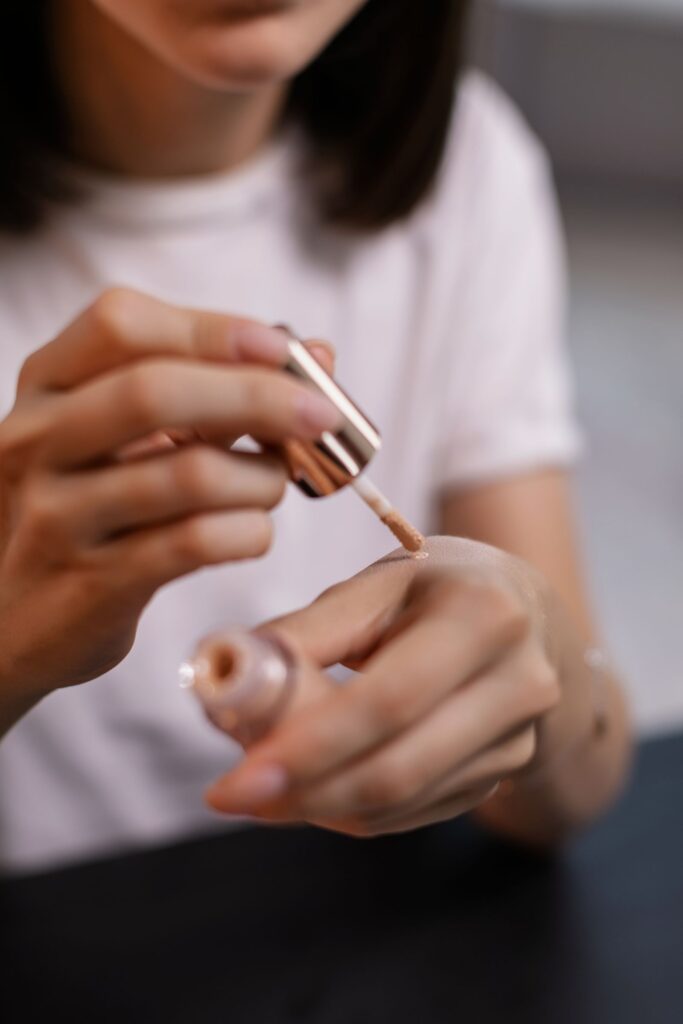
Most beauty counters and many larger beauty retailers will make you a small sample pot if you ask. Take two: the shade you think is right and the one next to it. Wear each for a full day, not just a quick test in the bathroom, because foundation that looks perfect at 8am can look different by 4pm.
When you are trying samples at home, take a photo in daylight with your phone’s regular camera, no filter or beauty mode. Photos exaggerate a mismatch, which is exactly what you want while testing.
Online shade finders can help, with limits
Most major brands now offer a shade finder on their website, either a quiz or a tool that lets you enter a shade you already wear in another brand. These are genuinely useful when you already own a foundation that matches well, because they translate a known shade rather than guessing from scratch.
Virtual try-on tools that use your camera are less reliable. They depend heavily on your lighting and screen, and the same face can come out two shades apart depending on the room. Treat them as a way to narrow things down, not as the final answer.
Before ordering online, check the return policy. Several retailers accept opened makeup returns within a set window, which takes most of the risk out of the purchase.
When you are between two shades
It happens all the time, especially with brands that have smaller ranges. A few ways to handle it:
- Buy both and mix. It costs more up front, but you get a custom match, and you can shift the ratio as your skin changes through the year.
- Go lighter if you use bronzer. Warming up a slightly light base is easy. Lightening a base that is too dark is not.
- Try a shade adjusting drop. Some brands sell concentrated white or deep pigment drops you can add to any foundation to tweak the depth.
Your shade will change, and that is normal
Skin gets lighter in winter and deeper in summer for most people, even if you are careful with sunscreen. It can also shift with acne treatments, retinoids, pregnancy and age. If a foundation that used to match now looks off, the formula probably has not changed. Your skin has.
A lot of women keep two shades on hand and switch around spring and autumn. Others mix the two in between seasons. Either approach beats forcing one shade to work all year.
A quick checklist for your next purchase
- Figure out your undertone in daylight using the white and cream test.
- Pick three shades that look close and swatch them along your jawline.
- Step outside and check them in natural light.
- Wait at least 15 minutes to see if any of them oxidize.
- Ask for samples of your top two and wear each one for a full day.
- Keep the receipt and know the return window.
It sounds like a lot of effort for one bottle, but foundation is something you put on almost every day. Spending an extra half hour getting the match right saves you from the drawer of near misses, and it means the product you paid for actually does its job: making your skin look like your skin, only a little more rested.