

Every January, the same thing happens in millions of homes. The decorations come down, the leftovers run out, and then the credit card statement arrives with a number nobody quite remembers agreeing to. The festive season has a way of turning small purchases into one very large total.
A beautiful Christmas does not have to cost that much. Most of what makes the holidays feel special, the lights, the food, the time together, can be done well on a modest budget. It just takes a little planning before the shopping starts, rather than after.
Set one total budget, then divide it
Start with a single number for the whole season: everything from gifts and food to decorations, travel, party outfits and the extra coffee runs while shopping. Pick a figure you can pay off without carrying a balance into the new year.
Then split it into categories. A simple breakdown might look like this:
- Gifts for family, friends, teachers and colleagues
- Food and drink, including Christmas dinner and any parties you host
- Decorations and wrapping
- Events and travel, such as outings, transport and gatherings
- A small buffer for the things you forget, because there are always some
Write it down somewhere you will actually look, whether that is a note on your phone or a simple spreadsheet. Seeing the numbers as you go is what keeps them from drifting.
Make a gift list before you shop
List every person you plan to buy for, with a spending limit next to each name. Doing this before you open a single shopping app makes it much easier to resist impulse buys and to notice if the list has quietly grown.
Then take a hard look at it. Many families and friendship groups are relieved when someone suggests a change, and you may not be the only one feeling the pressure.
Try a Secret Santa or a gift limit
For larger families or groups of friends, a Secret Santa means everyone buys one thoughtful gift instead of several small ones. Free online name generators make it easy to organize, even when people live far apart.
Other ideas that take the pressure off:
- Gifts for the children only, with the adults skipping presents for each other
- A set spending cap that everyone agrees to
- The four-gift rule for kids: something they want, something they need, something to wear and something to read
Shop early and watch prices
Last-minute shopping is expensive shopping. When time is running out, you buy what is available rather than what is good value, and you are more likely to pay for faster delivery too.
Starting early lets you compare prices and wait for genuine sales. If you are shopping online, add items to your basket and wait a day or two before buying. Some retailers send discount codes for abandoned carts, and the pause gives you time to decide whether you really want the item at all.
Give gifts that cost more thought than money
Some of the most treasured presents cost very little. A framed family photo, a jar of homemade cookies, a recipe book of family favorites, a playlist with a handwritten note, or a voucher promising a home-cooked dinner or a day of babysitting often mean more than something picked up in a hurry.
Experiences are another good option. A picnic, a movie night at home with all the trimmings, or a day trip together creates a memory that lasts longer than most things in a box.
Plan Christmas dinner like a project
Food is one of the biggest holiday expenses, and a lot of it ends up in the bin. Plan the menu a couple of weeks ahead, write a shopping list based on how many people are actually coming, and stick to it.
A few ways to keep costs down:
- Buy non-perishables such as drinks, flour, spices and frozen vegetables early, spreading the cost across several weeks.
- Choose your store’s own brand for staples. Few guests will notice the difference in the stuffing or the cranberry sauce.
- Ask guests to bring a dish, potluck style. Most people are happy to contribute.
- Plan what you will do with leftovers before the day, so nothing goes to waste.
Decorate with what you have
New decorations every year add up quickly. Before buying anything, unpack what you already own and see how far it goes. Rearranging familiar pieces in a new spot can make them feel fresh.
Natural decorations are cheap and beautiful: pine branches, pinecones, dried orange slices, cinnamon sticks and sprigs of greenery in jars. A few strings of warm fairy lights do more for a room than a cart full of new ornaments. If you do want something new, shop the after-Christmas sales for next year, when decorations are often heavily discounted.
Cut down on wrapping costs
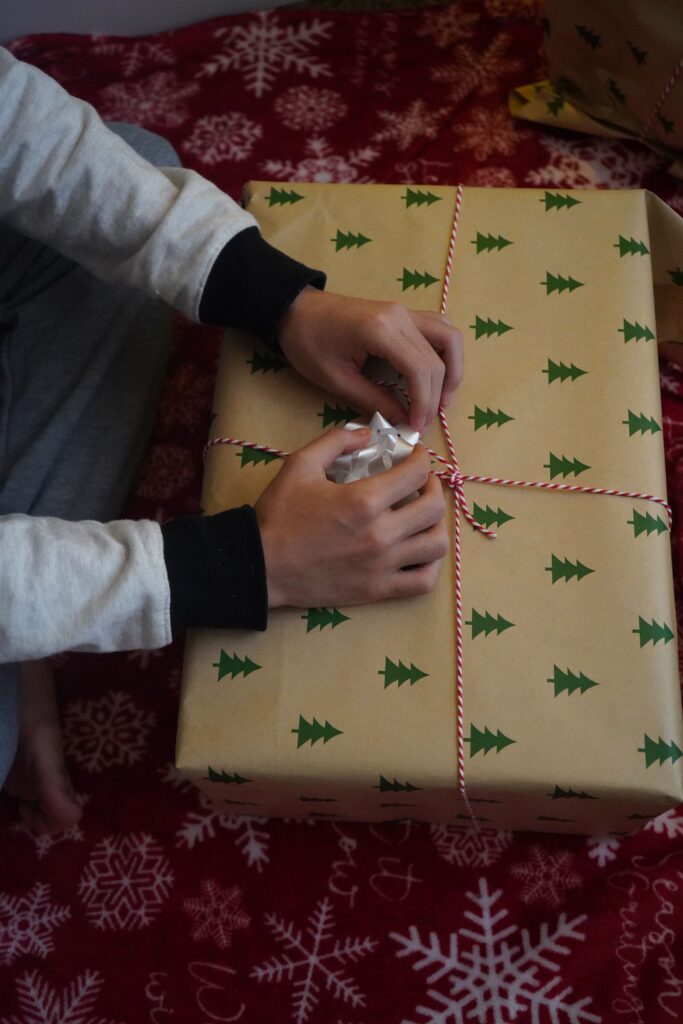
Wrapping paper, bags, tags and ribbon are easy to overlook, but they can add a surprising amount to the total. Plain brown kraft paper tied with string or ribbon looks elegant and costs very little. Children’s drawings, old maps, sheet music and newspaper also make charming wrapping.
Reusable fabric wraps and gift bags can be used year after year, which saves money over time and cuts down on waste.
Say no to a few things
December fills up quickly with parties, school events, work drinks, fairs and outings, and each one comes with costs: outfits, gifts, tickets, transport and food. It is fine to choose the ones that matter most and politely skip the rest.
The same goes for traditions that no longer bring much joy. If something feels more like an obligation than a pleasure, this might be the year to let it go.
Track as you spend
Keep receipts together, or log each purchase in your budget note as you go. Checking in once a week shows you where you stand while there is still time to adjust, rather than discovering the damage in January.
Ask most people about their favorite Christmas memories and very few mention a gift. They talk about the food someone always made, a funny moment at the table, the year it snowed, or the walk after dinner. Those are the parts worth spending on, and most of them cost nothing at all.