

It is 10am, the rain has not stopped since breakfast, and someone has already asked “what can I do now?” four times. The tablet is right there, and honestly, nobody would blame you for reaching for it. But on the days when you would rather keep screens for later, it helps to have a few ideas ready that do not require a trip to the craft store or an hour of setup.
The activities below use things most homes already have, work across a range of ages, and are chosen for one thing above all: they keep children busy long enough for you to finish a cup of coffee while it is still warm.
Build a blanket fort
There is a reason this one never goes out of style. Dining chairs, a couple of sheets, sofa cushions and some clothes pegs or hair clips to hold things in place are all you need. Younger children love the building part, while older kids often get ambitious with tunnels, separate rooms and signs on the door.
Once it is built, the fort becomes the setting for everything else: reading, snacks, a flashlight story session or simply hiding from siblings. Many families find a good fort keeps children occupied, on and off, for most of the day.
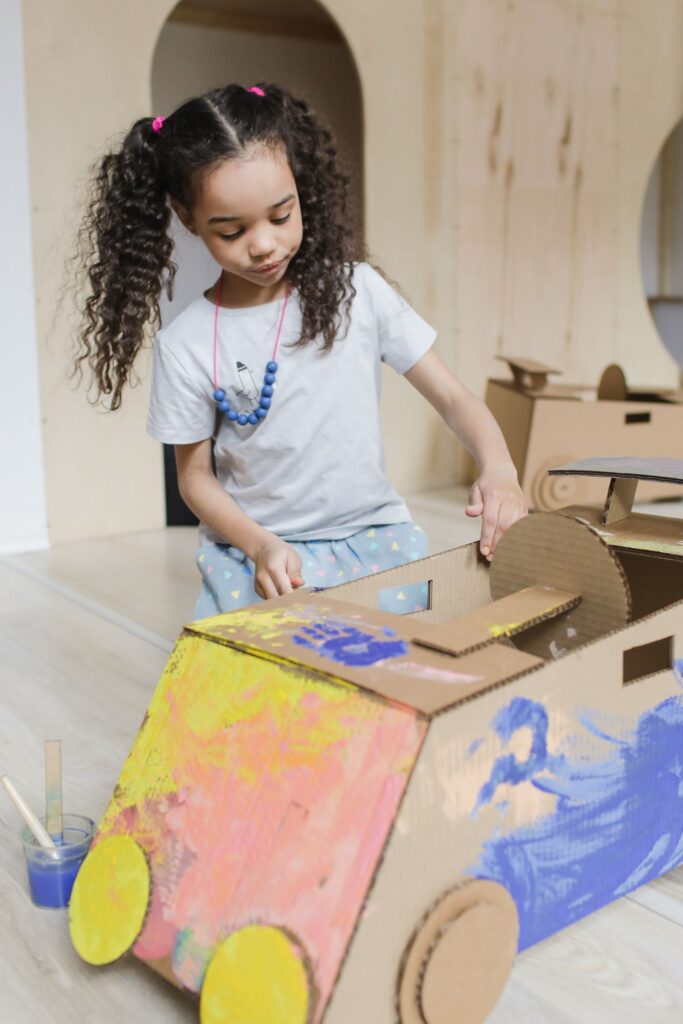
Turn a cardboard box into anything
A large delivery box is one of the best toys you will ever own. With some markers, tape and a pair of child-safe scissors, it can become a car, a rocket, a shop counter, a puppet theater or a house for stuffed animals.
Let your child decide what it should be. Then step back. Open-ended play like this builds creativity and problem-solving, and children tend to stay engaged far longer with something they designed themselves than with a craft that has one correct outcome.
Set up an indoor obstacle course
When energy levels are climbing and there is nowhere to run, a simple obstacle course helps burn some of it off. Use cushions to jump between, a broom balanced on two chairs to crawl under, a line of masking tape on the floor to walk like a tightrope, and a laundry basket to toss socks into.
Time each run with your phone and let children try to beat their record. Older kids can redesign the course themselves, which buys you even more time. Just move anything breakable out of the way first.
Bake something simple together
Baking covers measuring, counting, following steps and a reward at the end. Pick recipes with few ingredients and plenty of hands-on jobs: banana bread, basic cookies, muffins or no-bake energy balls. Toddlers can pour and stir, while older children can read the recipe and handle most of the process with supervision near the oven.
Expect some mess. Putting a baking tray under the mixing bowl catches a surprising amount of it.
Make a treasure hunt
Hide a small prize, a snack or a favorite toy somewhere in the house, then write a trail of clues leading to it. For non-readers, draw simple pictures of each hiding place instead: the fridge, under a pillow, inside a shoe. For older children, turn the clues into riddles.
Once they have found the prize, swap roles and let them hide something for you. Children often enjoy writing the clues even more than following them.
Try a few easy science experiments
A handful of kitchen experiments reliably impress kids of all ages:
- Baking soda volcano: mix baking soda with a little dish soap and food coloring in a cup, then pour in vinegar and watch it fizz over.
- Walking water: line up glasses of colored water and empty glasses, then connect them with folded paper towels. Over a few hours, the colors travel and mix.
- Sink or float: fill a sink or large bowl with water, gather random objects and ask children to predict which will float before testing each one.
- Homemade slime or playdough: there are many simple recipes using flour, salt and water, which are a safe choice for younger children.
Ask “what do you think will happen?” before each one. Making predictions is half the fun.
Put on a show
Raid the dress-up box, or the grown-up wardrobe, and let children create a play, a puppet show, a magic act or a concert. Give them an hour to rehearse and plan, then set up chairs for the audience and dim the lights for the performance.
Sock puppets made with odd socks and markers, or paper bag puppets with stuck-on paper features, extend this nicely for younger children.
Create an art station
Instead of planning a specific craft, put out a mix of materials and let children make whatever they want. Paper, crayons, glue sticks, old magazines, scraps of fabric, stickers, cotton balls and empty toilet paper rolls are plenty.
Collage is especially good for a wide age range, since there is no wrong way to do it. Cover the table with newspaper or an old shower curtain first, and the cleanup is much easier.
Play classic board and card games
Games such as Uno, Snap, Go Fish, Memory and simple board games teach turn-taking, patience and how to lose gracefully, which is a skill in itself. If you do not have many games, a regular deck of cards covers dozens of options.
Older children can invent their own board game on a sheet of cardboard, complete with rules, which often turns into an afternoon-long project.
Listen to an audiobook or podcast together
On days when everyone needs a quieter hour, an audiobook or a children’s podcast gives the same cozy feeling as a screen without the glow. Pair it with something for their hands, like drawing, building blocks or a puzzle, and many children will stay settled for a long stretch.
Your local library may offer free audiobooks through a digital lending app, which is worth checking.
A few things that make rainy days easier
- Keep a “rainy day box” with supplies set aside just for these days, so it feels special when it comes out.
- Write activity ideas on slips of paper and let children pick one from a jar.
- Mix active and calm activities so energy does not build up.
- Build in snack breaks. A lot of rainy day meltdowns are really hunger.
And if, at some point, nobody wants to do any of it and the children are lying on the floor complaining they are bored, that is fine too. Boredom is often the moment right before a child invents a game of their own, and some of the best afternoons start exactly that way.